
Blog
How to Choose the Right Operating Light for a Veterinary Clinic

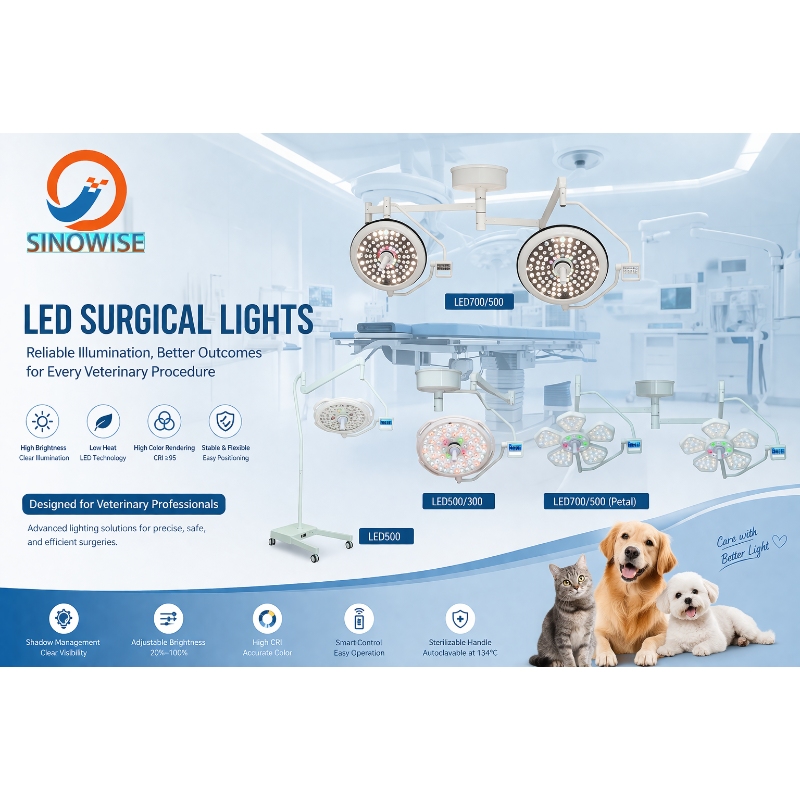
Choosing the right operating light is importang for any veterinary clinic. Unlike human hospitals, veterinary environments present unique challenges—animals of different sizes, unpredictable positioning, and a wide range of surgical surgery.
A high-quality veterinary surgical light does more than illuminate—it improves precision, reduces fatigue, and enhances overall surgical outcomes.
1. Brightness Is Important—But Stability Matters More
Many buyers focus only on maximum brightness (lux), but in real surgical scenarios, stable and uniform illumination is far more critical.
Look for:
- Even light distribution across the surgical field
- No flickering or sudden intensity changes
- Consistent performance during long surgery
Unstable lighting can cause eye strain and reduce surgical accuracy.
2. Low Heat Output for Animal Safety
Animals are more sensitive to heat than humans, especially during long procedures.
Traditional halogen lights generate significant heat, which can:
- Dry tissues
- Increase discomfort
- Affect recovery
Modern LED surgical lights solve this problem by delivering high brightness with minimal heat emission—creating a safer and more comfortable surgical environment.
3. Shadow Part Is Critical in Veterinary Surgery
In veterinary Surgery, shadows are more likely due to:
- Smaller surgical areas
- Multiple hand positions
- Changing animal posture
Advanced systems such as Automatic Shadow Management (AsM) can dynamically reduce shadows caused by the surgeon’s hands or instruments.
This ensures:
- Clear visibility at all times
- Improved precision
- Reduced need for constant repositioning
4. High Color Rendering (CRI) for Accurate Diagnosis
Accurate color perception is crucial in surgery.
Choose an operating light with:
- CRI (Color Rendering Index) ≥ 90 (ideally Ra ≥ 95)
This allows veterinarians to clearly distinguish:
- Blood vessels
- Tissue conditions
- Subtle color differences
Poor color rendering can lead to misjudgment during procedures.
5. Adjustable Brightness & Flexibility
Different procedures require different lighting conditions.
Key features to look for:
- Multiple brightness levels (e.g., 20%–100%)
- Smooth adjustment without delay
- Easy control during surgery
This flexibility is especially useful when switching between minor and complex procedures.
�� 6. Depth of Illumination & Focus
Veterinary surgeries often involve different depths, especially in larger animals.
A good operating light should provide:
- Excellent depth of field
- Focused and adjustable light spot
- Clear illumination even in deeper cavities
This reduces the need to constantly reposition the light.
7. Hygiene & Easy Sterilization
Veterinary clinics require fast turnover between surgery.
Look for:
- Smooth, easy-to-clean surfaces
- Detachable or autoclavable handles (134°C)
- Design compatible with laminar airflow
This helps maintain a clean and sterile environment.
⚖️ 8. Stability & Ease of Operation
A poorly balanced light can drift or lose position during surgery.
Important factors include:
- Stable suspension system
- Smooth positioning with minimal effort
- No unwanted movement after adjustment
This ensures uninterrupted workflow.
9. Smart Control Features (Optional but Valuable)
Modern surgical lights may include:
- Infrared or wireless remote control
- Memory settings for preferred brightness
- Touch control panels
These features improve convenience and efficiency in busy clinics.
Conclusion
The ideal veterinary operating light should combine:
✔ Stable illumination
✔ Low heat output
✔ Advanced shadow management
✔ High color accuracy
✔ Flexible adjustment and control
By focusing on real surgical needs—not just specifications—you can choose a lighting solution that truly supports your veterinary practice.
If you are looking for a reliable LED veterinary surgical light with advanced shadow management and high CRI, feel free to contact us for recommendations to your clinic.
Welcome contact: Muriel@sinowise.group
